

Sardinia’s Hidden Middle Ages: A Journey Through Castles, Villages, and Legends
From Porto Cervo to the most authentic part of Gallura, all the way to the ancient village of Galtellì: where the stones tell stories
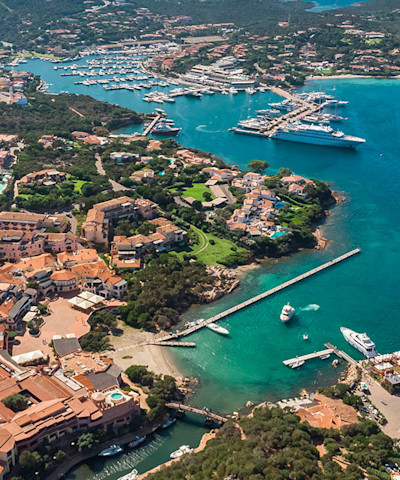
There is a hidden Sardinia, far from the beaches and the most popular tourist spots, where time seems to have stood still. It is a world of castles perched on the hills, small churches built among gigantic granite boulders, quiet villages, and the ancient residences of medieval lords. A fascinating world, steeped in history and legend, that can be discovered by following an itinerary through theGallura hinterland, starting from Porto Cervo and taking a few detours southward, all the way to Baronia.Between the 11th and 13th centuries, much of this territory belonged to theJudicate of Gallura, one of the four autonomous kingdoms that divided medieval Sardinia. Its capital was Civita—now known as Olbia—while the surrounding area was dotted with villages, fortifications, places of worship, and noble residences. This past is often little known, yet its traces remain visible in the landscape, among cork oak groves, centuries-old wild olive trees, and rocks sculpted by the wind.To discover it, you don’t have to go far. Some of the most interesting sites are less than an hour’s drive from Porto Cervo—perfect for planning a unique day out, combining culture, nature, and small villages to explore at your own pace.
Arzachena, at the Heart of Medieval Gallura
About 18 km from Porto Cervo, 20–25 minutes by car.The first stop is Arzachena, the ancient Arsaghena, which in the Middle Ages was part of the curatoria of Unale, one of the administrative districts of the Giudicato of Gallura.Known above all for its extraordinary prehistoric archaeological heritage, Arzachena also has a less obvious but equally fascinating medieval history. The ancient settlement endured difficult centuries, marked by crises and epidemics, leading to a gradual depopulation between the 14th and 15th centuries.Today, it is the ideal starting point for exploring the most authentic part of Gallura, following scenic roads that wind through a landscape where nature still retains its wild character.
Palazzo di Baldu, the Lost Residence of the Medieval Lords
About 35–45 km from Porto Cervo, in the municipality of Luogosanto.In the municipality of Luogosanto, in the village of Santu Stevanu, lies one of the most surprising sites on the itinerary: the Palazzo di Baldu, an ancient stately residence nestled in the countryside.Of this medieval complex, inhabited between the 13th and 15th centuries, a square tower—about ten meters high—and the remains of numerous rooms arranged around a courtyard still stand. Archaeological research has identified spaces used as living quarters, storage areas, kitchens, and workshops, revealing the image of what was once a bustling center.Its history is traditionally linked to the powerful Pisan Visconti family, who ruled the Giudicato of Gallura. Among the figures of this dynasty is Nino Visconti, mentioned by Dante Alighieri in the Divine Comedy.Strolling through the ruins of the palace is like taking a step back eight centuries, to a time when these countryside areas were traversed by merchants, artisans, and men of power. Today, everything is shrouded in silence, broken only by the wind rustling through the trees.
Balaiana Castle, a Fortress Between Sky and Granite
About 40–50 km from Porto CervoAmong the most spectacular remnants of the Galluran Middle Ages is the Balaiana Castle, perched on a granite spur overlooking the surrounding hills.To reach it, you must tackle an uphill trail, but the effort is rewarded by an extraordinary view. First documented in the 12th century, the fortress was linked to the judges of Gallura and occupied a strategic position for controlling the territory.Not far away stands the tiny Romanesque church of San Leonardo, a simple structure built of granite blocks that seems to blend seamlessly with the rock.It is one of those places where the landscape tells the story better than any book. Just look around to imagine knights, messengers, and travelers traversing these heights on their way to the residences of the local lords.
The Hermitage of San Trano, a church carved from the rock
About 35–45 km from Porto Cervo.If there is one place capable of surprising even the most seasoned traveler, it is the Hermitage of San Trano. Here, the church seems to rise directly from the mountain, nestled among enormous granite boulders that create a natural setting of rare beauty.According to tradition, this secluded spot was home to the hermit saints Nicola and Trano, figures deeply connected to the spirituality of Gallura. The small cave incorporated into the building is said to have been their refuge, transformed over the centuries into a place of prayer and devotion.The charm of the hermitage lies above all in its simplicity. No monumental architecture, no sumptuous decoration: just stone, silence, and an unobstructed view of the landscape. A must-see stop to discover themost mystical side of Sardinia.
Luogosanto, the Village of Churches and Pilgrims
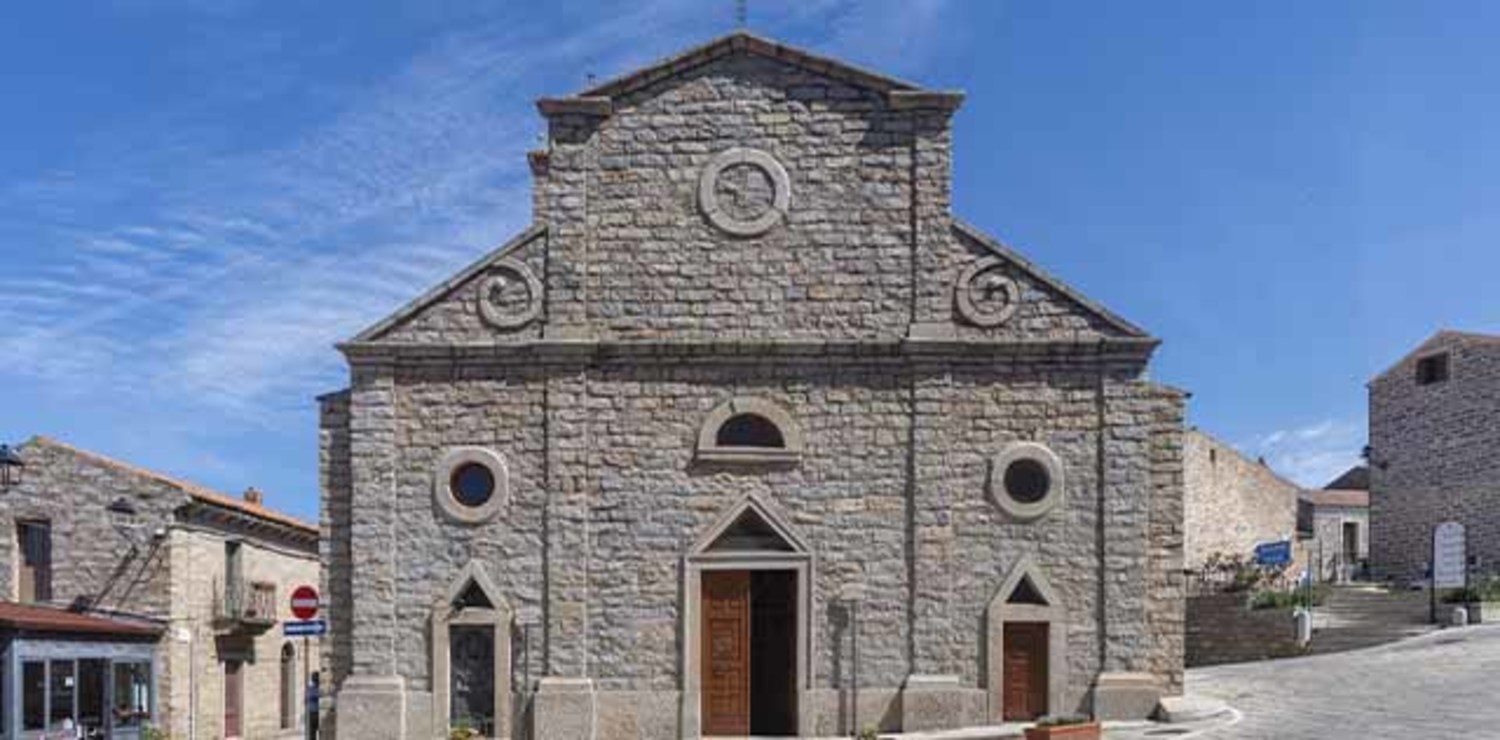
About 35–40 km from Porto Cervo, a 40-minute drive.The name itself is a promise. Luogosanto, a small village in the Gallura hinterland, owes its identity to the presence of numerous places of worship—rural churches and shrines—that have made it a pilgrimage destination for centuries.The religious heart of the village is theBasilica of Our Lady of Luogosanto, whose origins are traditionally traced back to the 13th century. Dedicated to the Madonna Regina di Gallura, it is the center of a devotion deeply rooted in local history.But the pleasure of visiting Luogosanto also lies in strolling aimlessly through quiet alleyways and past granite houses, discovering hidden corners and a pace of life far removed from the hustle and bustle of tourist resorts. A stop here can also be an opportunity to sample the flavors of Gallura’s cuisine, including cheeses, cured meats, traditional dishes, and local wines.
Galtellì, Among Medieval Frescoes and the Pages of Grazia Deledda
About 120–125 km from Porto CervoFor those who wish to continue their journey, it’s worth heading further south to Galtellì, one of the most charming villages in the Baronia region, at the foot of the imposing Monte Tuttavista.In the Middle Ages, Galtellì was an important religious and administrative center of the Giudicato of Gallura, a bishop’s seat and a strategic location for controlling the Cedrino Valley.Its most precious treasure is the Romanesque church of San Pietro, a small building that houses a rare cycle of frescoes dating back to the early 13th century. The paintings depict scenes from the Old and New Testaments and represent one of the most significant examples of medieval Sardinian art.Next to the church, the ruins of a large cathedral can also be seen; construction began in the late 11th century but was never completed. This ambitious project attests to the importance the village attained during the Middle Ages.What makes Galtellì even more fascinating is its deep connection to Grazia Deledda, the great Sardinian writer, born in Nuoro in 1871 and awarded the Nobel Prize in Literature in 1926—the first Italian woman to receive this honor. It was Galtellì itself—with its low-lying houses, narrow alleys, ancient traditions, and landscape dominated by Mount Tuttavista—that inspired Galte, the fictional town where Canne al vento, one of her most famous novels published in 1913, is set.A particularly evocative route is that of the Grazia Deledda Literary Park, which allows visitors to rediscover the places evoked in *Canne al vento*: the home of the Pintor ladies, the novel’s protagonists; the vegetable garden of Efix, their faithful servant; and the church of San Pietro. An itinerary that blends reality and literature, making Galtellì a special destination even for those who love to discover places through the eyes of great writers.Today, Galtellì once again serves as a meeting place for cultures and spirituality. From November 6 to 8, 2026, the village will host the Second World Convention of Religious and Secular Cultures, titled “The UN of Religions,” promoted by the “Demetrio Marco De Luca – We Are All Brothers” Institute of Religious Cultures for Humanity and Peace Association. An international event dedicated to dialogue between the major faiths and secular cultures, with the goal of promoting peace and brotherhood among peoples. Among the announced initiatives is the unveiling of the “Path of Symbols,” a trail of nine basalt statues that convey, through art, a universal ideal of dialogue and coexistence. An event that renews, in a contemporary way, the ancient spiritual vocation of this small medieval town.
Near Galtellì, on the heights overlooking the Cedrino Valley, just outside the village, stand the ruins of Pontes Castle, a medieval fortress that over the centuries was at the center of the region’s political and military events.Today, only walls and structures weathered by time remain, but the panoramic setting preserves the ancient castle’s charm intact. From here, the view stretches out over the Cedrino Valley and the surrounding mountains.History is intertwined with folk legends, which tell of ancient lords and treasures hidden among the ruins. A world of tales and traditions that seems to resonate with the literary atmosphere of Grazia Deledda, who was deeply connected to Galtellì—the village that inspired the setting of her famous novel *Canne al vento*.It’s the perfect conclusion to a journey that winds through real places yet, at times, feels as though it’s stepping into the pages of a novel. Because, not far from Porto Cervo, there’s another Sardinia just waiting to be discovered.