


Giovanni Scapagnini, a scientist with a long career in the United States, talks to us about longevity and nutrition
One of the leading experts in the study of the relationship between nutrition, the brain, and disease prevention is in Porto Cervo for Longevity Fest 2026
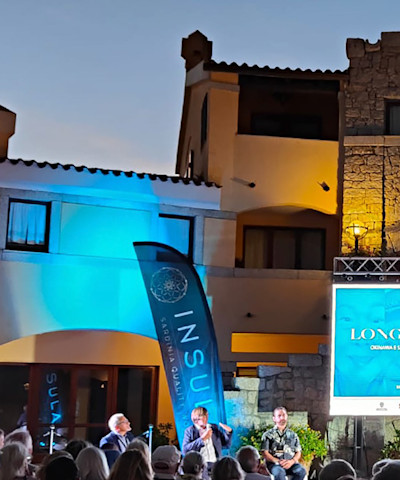
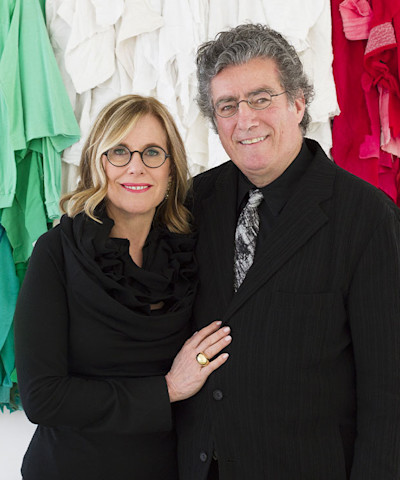
An internationally renowned neuroscientist with a long research career in the U.S. at prestigious institutions such as the Rockefeller Neuroscience Institute and the National Institutes of Health, Giovanni Scapagnini is Vice President of the Italian Society of Nutraceuticals and one of the leading experts in the study of the relationship between nutrition, the brain, and disease prevention. As a guest and speaker at the Longevity Fest Costa Smeralda—an event dedicated to the culture of longevity that brought together doctors, researchers, academics, innovators, and science communicators on October 3 and 4 to discuss the new frontiers of health, prevention, and active aging—Scapagnini presented his concept of longevity, which encompasses small and seemingly simple tips. Conceived and directed by filmmaker Pietro Mereu, the Festival is one of the events of the Costa Smeralda Longevity Weeks 2026, an initiative promoted by the Costa Smeralda Consortium in partnership with Smeralda Holding, which will enliven the region with a rich calendar of sporting events and holistic activities through October 11.
“We should prescribe a couple of hours a week spent with good friends on a blank prescription,” says Scampagnini with a touch of irony—though not too much—because for him, human relationships and social interactions free of negativity are an excellent elixir for good health.
The word “longevity” has become a term that is often overused today, quickly transferred from the world of scientific research to that of marketing. What does longevity mean to you?
Let’s say we’re halfway there; a dichotomy is emerging. As a researcher—as well as a doctor—I approach the topic of longevity with a certain degree of discomfort, but specifically from a semantic standpoint. Thirty years ago, we began discussing it with great pride, as a new concept with the potential to benefit all of humanity. Today it’s been overused; it’s become a ‘buzzword’ that’s even sold at the supermarket. This somewhat devalues what’s really behind it in terms of research—such as understanding aging, the mechanisms underlying aging, and the possibility of addressing the real problem: reducing age-related diseases.
Living longer, yes, but in good health. Is that the most important thing for you?
Extending life is certainly very interesting, but clearly the real issue is increasing healthy life expectancy; therefore, minimizing the impact of disease is becoming something increasingly manageable—at least in theory. We’re trying to apply much of what we’ve learned to the broader community through prevention strategies, which are the true foundation of collective sustainability. Unfortunately, paradoxically, longevity has also become a source of stress. I’m thinking of the incredible lockdown period, which triggered a sort of psychosis regarding general health, turning it almost into a luxury good. Framing longevity as a luxury good holds great significance in some contexts, but it risks becoming highly counterproductive to the true goal—which is to bring health to the world.
Where does science stand on the topic of longevity?
We’re halfway there: science is gaining an ever-better understanding of the mechanisms underlying aging. Many potential interventions are becoming genuinely viable. What’s promised is often tied to marketing that fundamentally aims to tap into a market willing to spend heavily, and in those cases, the promises often go unfulfilled—in the sense that I can’t tell you today that we have a solution to aging. We can apply some Band-Aid solutions, but these are remedies we were already familiar with years ago that are now being marketed in a slightly more context-appropriate way. Today, helping the general population gain a greater number of healthy years is becoming increasingly feasible, but it requires a modicum of humility and a shift in approach when it comes to public communication.
Sardinia is a land of longevity, listed among the world’s Blue Zones. Do you think there’s something specific about this island that connects it to other regions with centenarians?
I believe the factor that most impacts aging is our ability to manage our anxieties. When aging itself becomes a source of anxiety, it’s probably very difficult to break out of that cycle. Have you ever seen a centenarian who worried about becoming a centenarian? They reached that age for reasons beyond their control. Reducing anxiety, the quality of relationships, and ‘kilometer 0’—that is, connecting with one’s local area through healthy eating, understood not as an obsession with the health benefits of technology, but rather as food that is much more closely tied to nature and the local environment. I believe this is the true secret of the Blue Zones, as is certainly outdoor activity. The truth is that in the Blue Zones, no one has ever been to a gym—this is because outdoor activity is probably worth much more than an hour at the gym. Sardinia—just as we’ve seen in previous years with Costa Rica and Okinawa, regions that are extremely distant from one another—shares precisely these characteristics: little stress regarding existential concerns, a certain lightness regarding the anxiety of longevity, plenty of time spent outdoors, and a rediscovery of nature’s rhythms. It may sound trivial, but today it has become the true luxury.