text Matteo Parigi Bini
photo Massimo Sestini



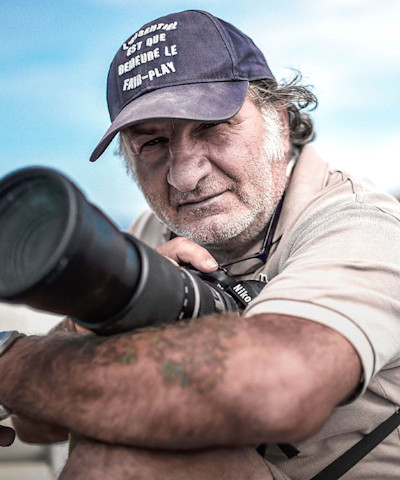
Massimo Sestini, Master of aerial photography
The photographer recounts a life filled with iconic photos, flights, dives, and a special connection to Sardinia
For over forty years, he has been capturing the world from a unique perspective. From major news events to war reportage, to the aerial images that have become his signature style, photographer Massimo Sestini has transformed every shot into a story. In 2015, he won the World Press Photo Award with Mare Nostrum, a photograph that symbolizes the tragedy of migration. With him, we retrace a career in which passion, intuition, and courage intertwine with a deep bond with Sardinia, the land where some of his fondest memories lie and where he took the shot that changed his professional life.
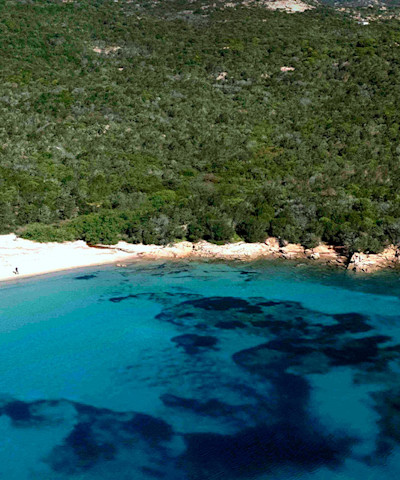
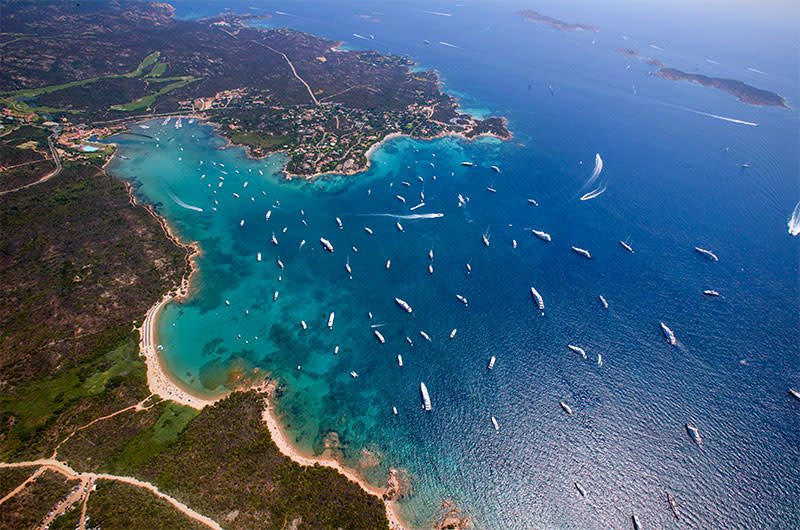 Sardinia as seen from above
When did you discover your passion for photography?
I think I inherited it from my paternal grandfather. He was in love with the Dolomites. Every summer, he took my brother and me on long walks in the mountains, and once home, he’d set up the projector, unfold the screen, and show us slides from his excursions. Then, when I was twelve or thirteen, my father gave me a small Pocket 110 on his return from a trip to the United States. In high school, I was already the photographer for class photos, and shortly thereafter, I started covering rock concerts. Bruno Casini organized an exhibition of my photographs at the Casablanca in Florence, titled A Seventeen-Year-Old and His Lens. I enrolled to read Political Science at university, but by then I had realized that photography would be my path. I joined Press Photo as a printer and shop boy, where I learned the trade alongside professionals like Fulvio Frighi. After a couple of years, however, I decided to leave: I wanted to do reportage, to recount the world.
When did Sardinia enter your life?
As a boy, I windsurfed between Torbole, on Lake Garda, and Porto Pollo, on Isola dei Gabbiani. With work, I began frequenting Porto Cervo for reportage, lifestyle shoots, and photographs of the celebrities who spent their summers there. I sailed extensively in Sardinia, experiencing the sea as a sailor and a diver. Its waters have a unique clarity, which allowed me to produce some of the most beautiful reports for the Italian Navy, including those on submarines. And it was there, in 1991, that the shot that changed my career came – Princess Diana in a bikini at Capo Coda Cavallo.
Photography from above has become your signature. When did you choose this perspective?
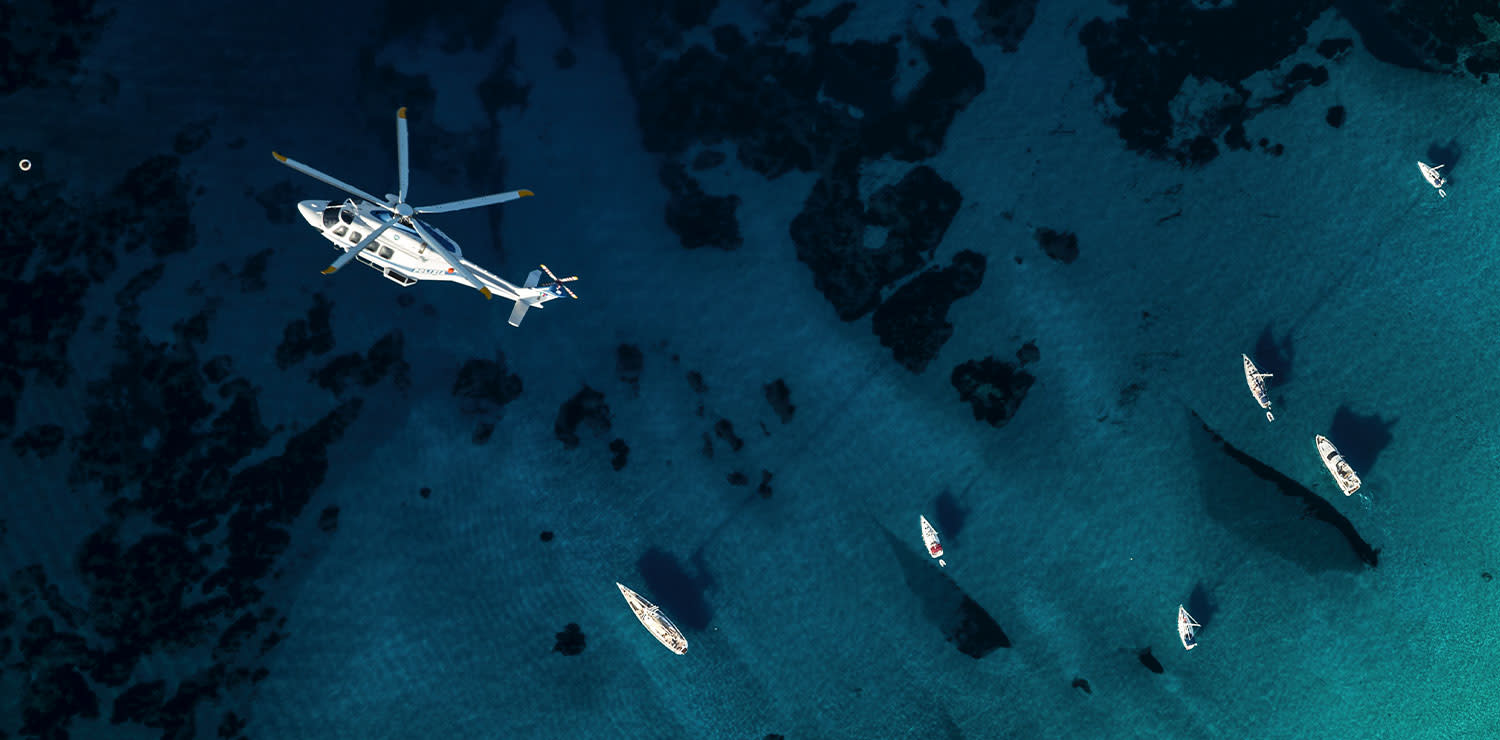
It was a necessity. During the years of the Mafia massacres, I realized that by arriving at the sites of the attacks with other photographers, I was producing images that were identical to theirs, which I couldn’t sell. I had to find a different perspective. After the Capaci massacre, I rented a small Cessna in Palermo, convinced the pilot to remove the door, and photographed the devastation from above, investing my own money without knowing if I’d sell those images. After the Via D’Amelio attack, I switched to helicopters. It was then that I understood how a perfectly vertical photograph could tell a story in a new way. Today, we’re used to drones, but back then, it was a revolutionary change in perspective. The challenge was to avoid the ‘Google Earth effect’, using helicopters and powerful telephoto lenses capable of capturing the story even from thousands of meters above.
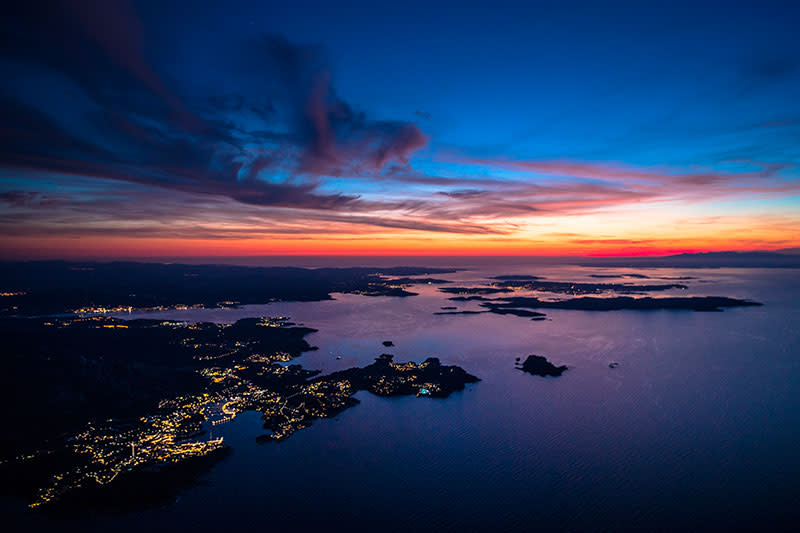 Sardinia as seen from above
For the last two years, you’ve followed the Amerigo Vespucci training ship around the world. How do you describe such an important symbol of the Italian Navy?
For me, the Vespucci represents everything I love: the sea, the wind, and sailing. I didn’t want to limit myself to photographing it, but to tell its story from every possible perspective. I shot it from above, from helicopters, from the masthead, 47 meters above the surface, and even underwater. I dived beneath the hull to photograph the anchor as the Vespucci rode above the surface.
In 2025, you risked your life while diving. What did that experience leave you with?
It changed me profoundly, first and foremost as a person. Today, I feel a greater need to show affection and be close to people. But it also changed my way of photographing. I realized that I had survived, unlike so many migrants. This impelled me to tell the story of migrant rescues from a completely different perspective. No longer from above, but from beneath the water. That’s how the photograph was conceived, showing the migrants now safe on the Coast Guard dinghy, while beneath the surface lies the abyss, the place where so many others lost their lives. I believe that shot would never have existed without what I had experienced.
Is there a place in Sardinia you’re most attached to?
Capo Coda Cavallo. That’s where it all began, with the photo I took of Princess Diana in a bikini, an image that broke British Royal protocol at the time. It went around the world, made the front pages of hundreds of newspapers, and changed my career. Looking back on it now, I realize that life takes talent, determination, and even a good dose of luck. That morning, I had all three.