








text by Antonella Brianda



Sardinian Favata: The Traditional Recipe of Sardinia’s Centenarians
The history and secrets of the longevity dish
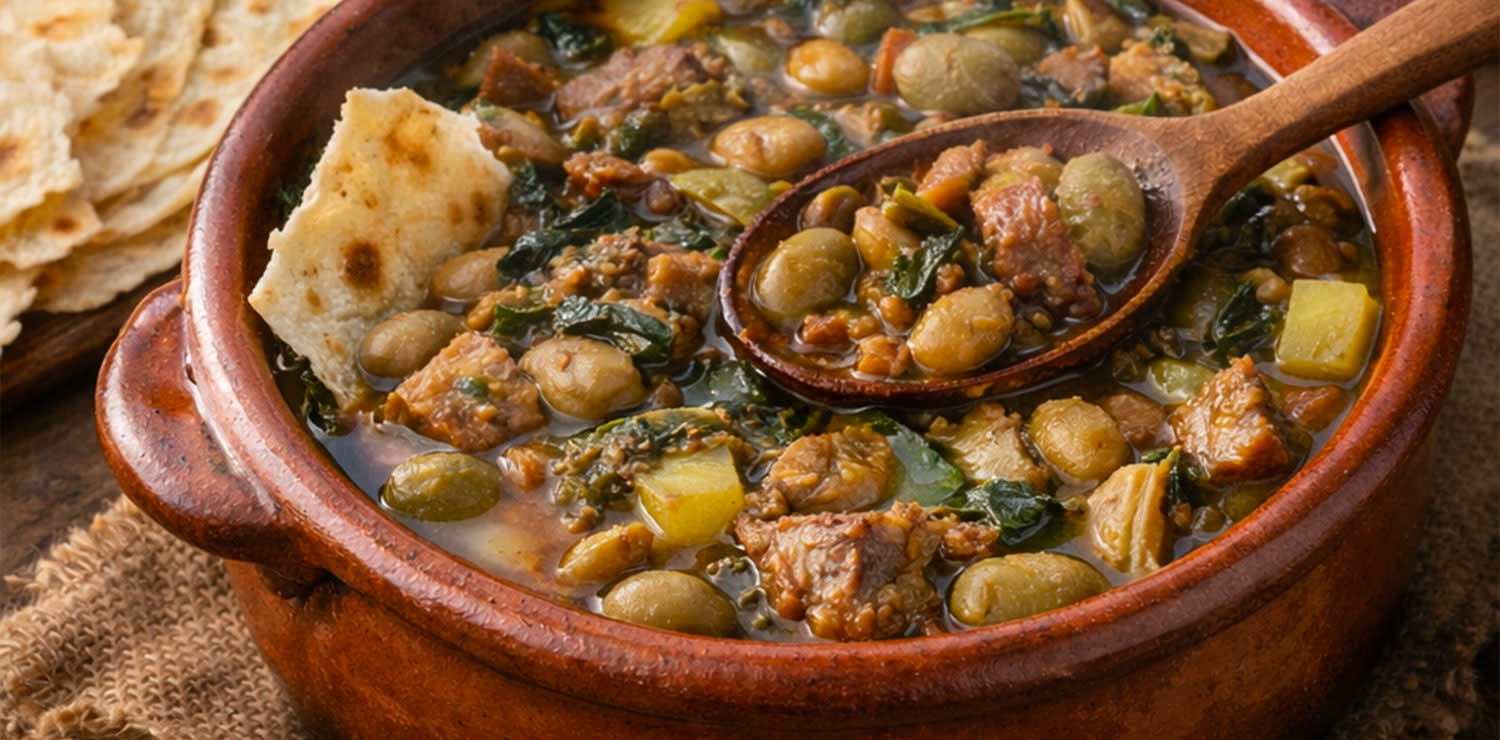
More than just a dish, it’s a journey to the land of centenarians, discovering those flavours and ingredients, so hard to find on modern tables, that represent a true elixir of long life. It’s ‘Fae ‘e laldu’, Broad Beans and Lard, also known as Favata: the ingredients can be counted on one hand and are strictly zero-kilometre. Broad beans, pork morsels with rind and fat, and wild fennel, wild mint, garlic, chard, and potatoes.
Cooked slowly for hours, preferably in a large terracotta pot, after blending lard, mint, garlic, and fennel, whose unmistakable aroma fills the kitchen, this soup has the power to warm the heart and promises longevity.
One of Sardinia’s centenarian dishes, those dishes that, cooked and consumed on the island since time immemorial, have contributed to the Sardinians’ reputation as a long-lived people. ‘Fae ‘e laldu’ was often found in the homes of farmers and breeders, who naturally used homegrown ingredients, including free-range pigs. The magic of watching this dish being prepared today lies in the time it takes to search for ingredients, the harvesting of mint and wild fennel, and the sensory journey that comes from smelling their aromas, which blend with the sweet scents of fresh broad beans and lard. Even eaten plain, this soup is delicious, but with the addition of another homemade ingredient, ‘Fae ‘e laldu’ takes on yet another flavour.
It’s customary to dip carasau bread into its broth for just a few seconds, just long enough to absorb the flavour while preserving some of its crunchiness. It’s a secret Sardinian grandmothers share with their grandchildren, one they eagerly await when it’s time to ladle Favata into their bowls.