








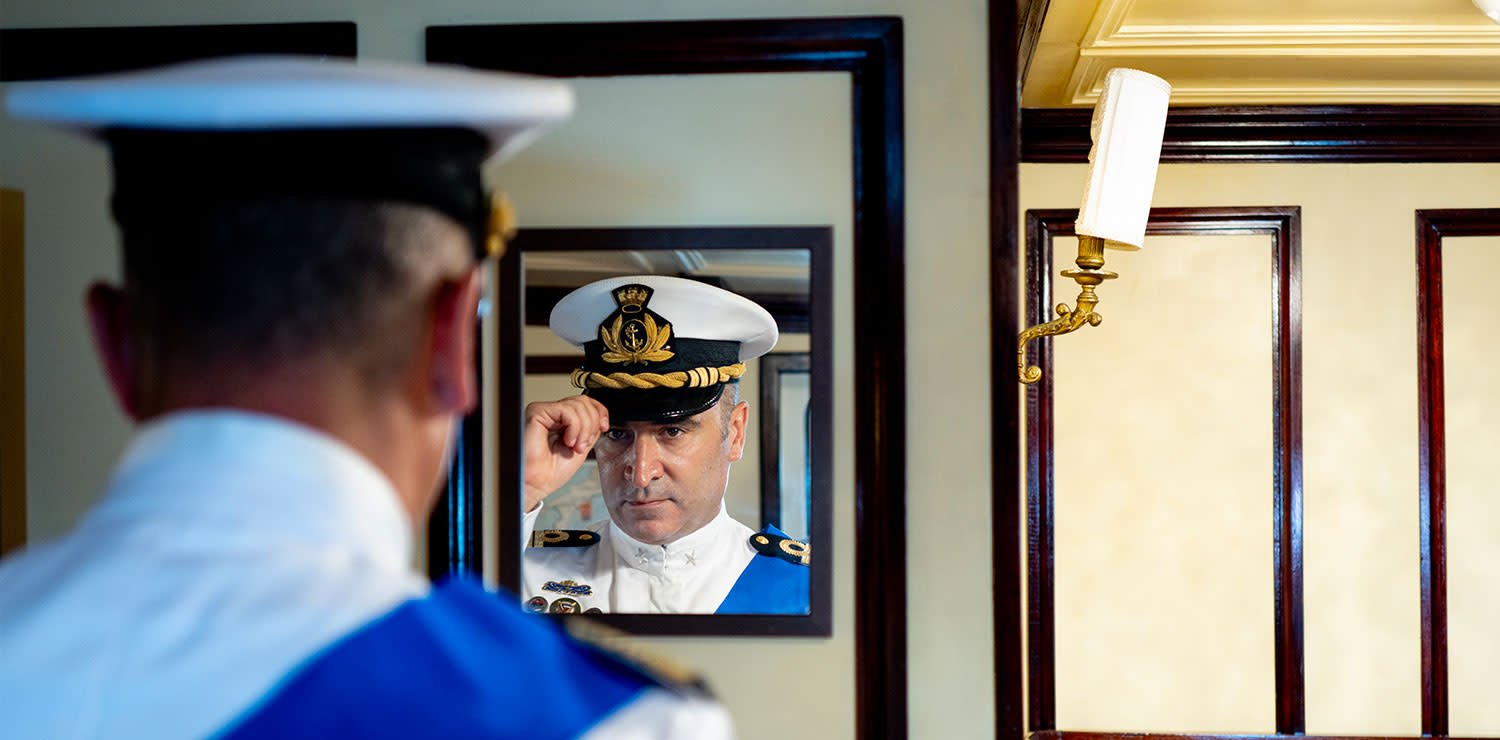
text by Francesca Lombardi
photo by Massimo Sestini



Amerigo Vespucci: A Round-the-World Voyage as Told by Captain Giuseppe Lai
Interview with the captain of the Italian Navy’s famous sailing ship
The Amerigo Vespucci’s around-the-world voyage was an epic journey: nearly two years at sea, from July 2023 to June 2025. Six hundred days away from Italy. The intercontinental leg, which concluded with the return to Trieste, was followed by a tour of the Mediterranean. Venice, Capri, and Sardinia, with their unique landscapes. On the occasion of the 2026 Literary Prize, we met Giuseppe Lai, currently Deputy Military Advisor to the Prime Minister and Commander of the Amerigo Vespucci during her around-the-world voyage, who was awarded this year’s Special Prize.
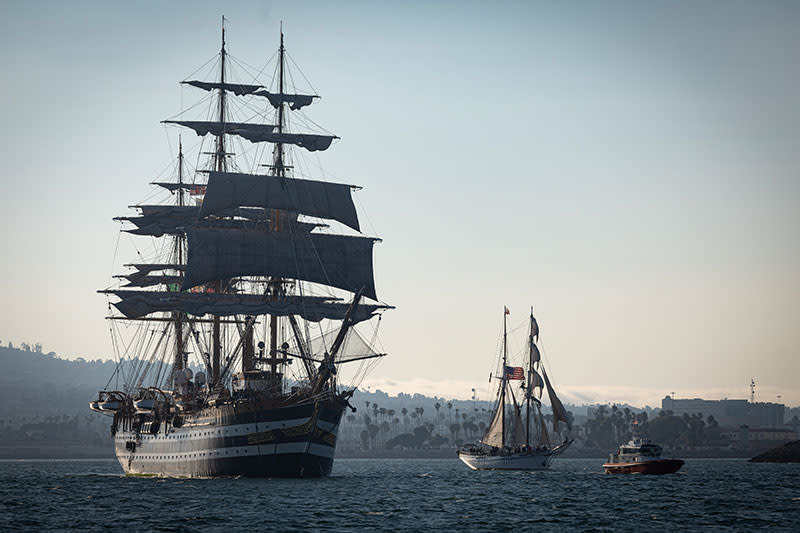 Amerigo Vespucci
What was it like to encounter cultural identities?
It was the most valuable aspect of the experience. Interacting with different cultures is a rare opportunity for personal growth, especially in places like Chile, Peru, and Ecuador, which are difficult to truly understand. It’s striking how far the reality is from stereotypes: we often imagine continents in a simplified way, but instead we discover great cultural depth and variety. Cuisine is also an important bridge: Peruvian cuisine, for example, surprised me. And then there’s the perception of Italy around the world.
Do they still perceive us as a nation of poets and sailors?
Italy’s image abroad is very positive, often better than that we have of ourselves. We’re seen not just as lovers of beauty, but as a cultural model, capable of engaging with diverse realities. It’s a quality rooted in our history.
During the voyage, do you grasp the significance of such a huge undertaking?
During the voyage, you’re focused on the present and your daily responsibilities. Only afterwards do you truly understand the full extent of the experience, along with the pride that surround our sailing ship.
How many people were on board?
The “regular” crew consisted of about 250 people, a number that rose to over 400 when trainees were included.. A true traveling community. Management relies on the human factor; the problems are more relational than technical. The captain must know how to build a network, and the team is essential.
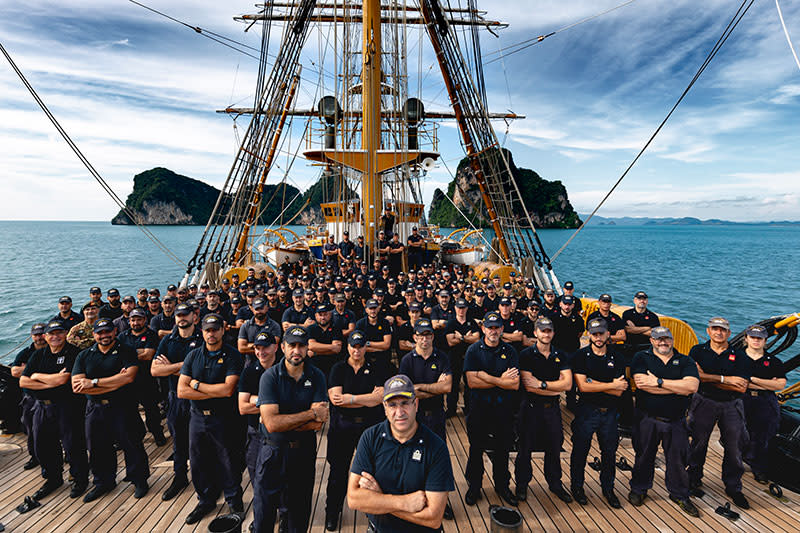 Amerigo Vespucci
How important is team spirit?
It’s essential: on a ship, nothing is done alone. Every manoeuvre requires coordination. The sea also reshuffles roles: those who seem less prepared on land can prove crucial at sea.
What were the most difficult challenges?
The Pacific crossing was demanding: from Los Angeles to Tokyo in two months, with only one stop in Hawaii. Cape Horn was also challenging due to the extreme conditions. But the real challenge is daily: maintaining high levels of concentration for two years.
Is there a place that has impressed you more than others?
It’s difficult to choose just one. Hawaii, the Galapagos, Thailand: each place has its own magic. And then Italy seen from the sea, always surprising.
Did your origins influence this choice?
A lot. Summers in San Teodoro, Sardinia, shaped my relationship with the sea: fascinating, but also fearful. It was this duality that drove me to explore it, and ships became the means to do so.